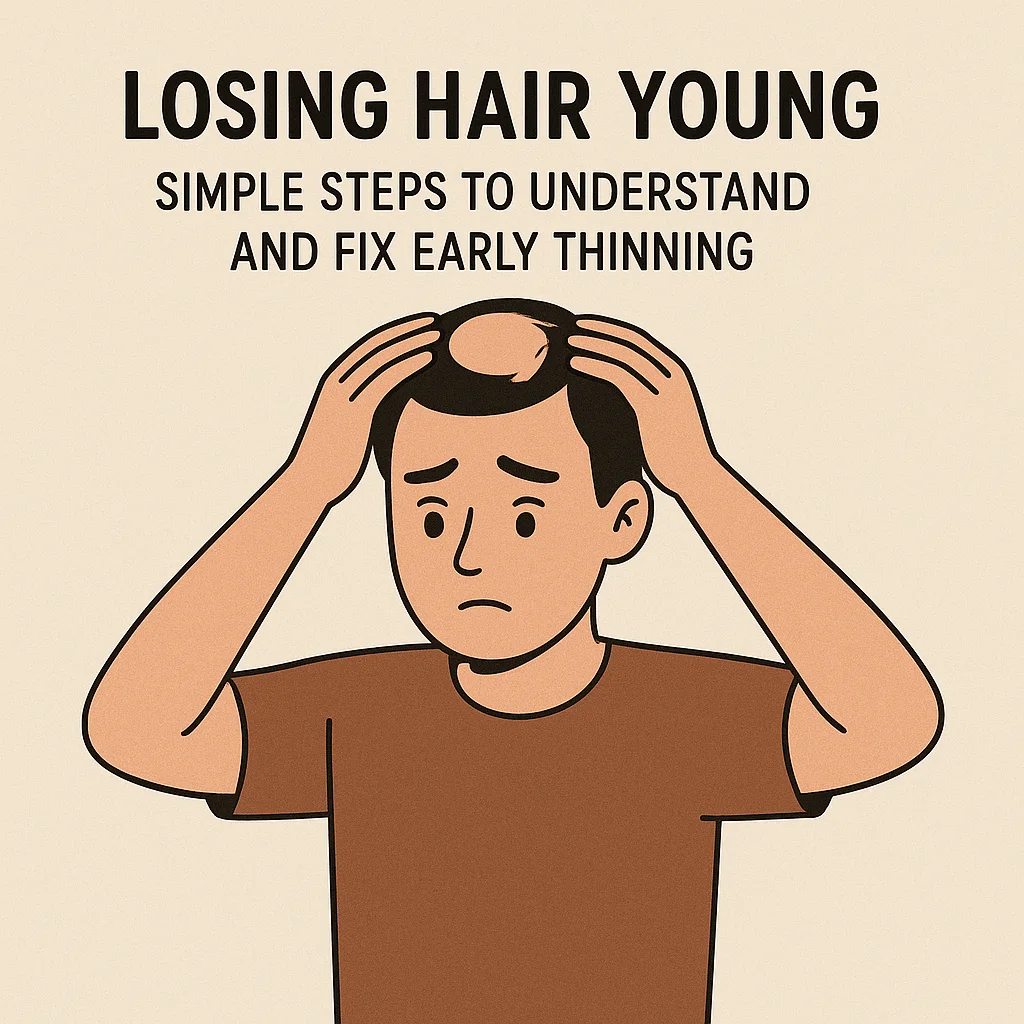
Losing Hair Young: Simple Steps to Understand and Fix Early Thinning
Finding you're losing hair in your 20s or 30s can be upsetting. It seems to happen fast, but early hair loss is usually caused by a mix of genes, inner health issues, and daily stress. To fix it, we need to look past hair creams and get to the real reasons.
Why Your Hair Might Be Falling Out
Knowing why your hair is shedding is the most important step to finding the solution.
Health Inside Your Body
Hair is the first thing your body cuts back on when things aren't right inside.
Missing Nutrients: This is common. If you have low levels of Vitamin D, stored iron (Ferritin), Vitamin B12, or Zinc, it can stop hair from growing correctly. This often causes hair to fall out everywhere at once (doctors call this Telogen Effluvium).
Hormone Changes: Hormones play a big role for everyone. In men, it's often a sensitivity to a hormone called DHT. In women, problems with the thyroid or conditions like PCOS can cause hair loss.
Life Stress and Habits
How you live your life affects your hair directly.
Too Much Stress: High, constant stress releases a hormone (cortisol) that pushes growing hairs into the rest phase too soon. This means hair falls out later. This stress-related hair loss usually stops once the stress is gone.
Bad Hair Habits: Using too much heat, pulling hair tight (like in very tight ponytails or braids), or using harsh chemicals can damage the hair roots, causing traction alopecia over time.
Taking Action: What You Can Do Right Now
Fixing early hair loss needs a planned approach.
Check Your Health First
Don't guess—get tested. The best first step is to see a skin doctor (dermatologist) who can order blood tests.
What to Test: Ask to check your thyroid, blood count, and especially your Ferritin levels. Fixing a missing nutrient is often the quickest way to see hair growth.
Take Only What You Need: Only take vitamins or supplements if your test results show you are low in something. Taking too much of some vitamins (like Vitamin A) can actually make hair loss worse.
Care for Your Scalp
While you fix your health, you can help your scalp grow hair.
Medicated Help: Minoxidil (like Rogaine) is an approved medicine that can wake up hair roots and make the growth phase last longer. You must use it every day to see results.
Clean Scalp: Treat your scalp like your face. Use gentle shampoos and give yourself scalp massages often to bring more blood flow to the roots.
Better Sleep and Calm
No medicine can beat the effects of bad sleep and high stress.
Sleep Well: Try to get 7-8 hours of quality sleep every night. Sleep is when your body repairs itself and balances hormones.
Be Mindful: Take short breaks to walk or do deep breathing to lower your stress levels. This helps your body stop the cycle of stress-related shedding.
Dr. Vertika Kulshrestha- Losing hair early can feel scary, but it can almost always be managed. By treating it as a simple health issue, starting with a doctor's check, and being consistent with care, you can focus on the solution instead of the problem.