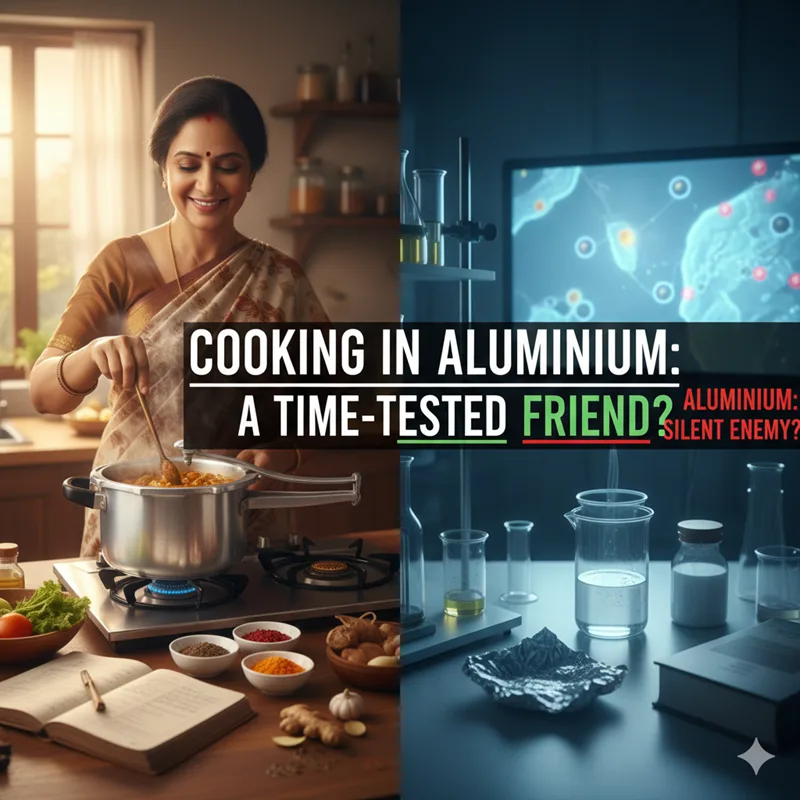
Cooking in Aluminium: A Time-Tested Friend or a Silent Enemy?
If you look into your pantry right now, I’d bet you have at least two or three aluminium pots. They are the workhorses of the kitchen. But if you’ve ever noticed that your bright silver pan looks "pitted" or dull after cooking a tomato-based curry, you’ve actually seen a chemical reaction in real-time.
The big question: Is that metal ending up in your stomach? The short answer is yes. The real question is: Does it matter?
1. The "Leaching" Problem
Aluminium is a highly reactive metal. When it comes into contact with heat and acids (like tomatoes, lemon, tamarind, or even curd), tiny particles of the metal dissolve and mix into your food.
The Reality: On average, we might ingest about 7–9 mg of aluminium a day. While our bodies are fairly good at flushing out small amounts through our kidneys, the problem starts when we "overdose" on it daily, year after year.
2. The Link to Memory (The Big Fear)
For years, there’s been a scary rumor linking aluminium to Alzheimer’s disease.
The Human Context: While science hasn't found a "smoking gun" that says aluminium causes the disease, many studies have found high concentrations of the metal in the brains of patients. It might not be the direct cause, but it’s certainly an unwanted guest that our brains don't know how to handle.
3. When is it most dangerous?
You don't need to throw everything away today, but you should be careful about how you use it:
The Acid Rule: Never, ever cook "Khatti" (acidic) things in aluminium. Tomatoes, vinegar, and citrus act like a magnet that pulls the metal out of the pan and into your gravy.
The "Old Pot" Warning: If your cooker or pan has scratches, pits, or looks thin at the bottom, it’s leaching significantly more metal than a new one. That "vintage" pan isn't an heirloom; it’s a health risk.
- 4. Better, Safer Ways to Cook
If you want to reduce your "metal intake" without spending a fortune, here’s the human approach:
Switch the "Acidic" Pots: Buy at least one good Stainless Steel or Cast Iron pot specifically for your curries and dals.
Hard-Anodized is Better: If you love the lightness of aluminium, switch to "Hard-Anodized" cookware. This process seals the metal so it doesn't react with your food.
Don't Store Food: Cooking in it is one thing, but leaving your leftover sabzi in an aluminium pan overnight is a big no-no. Transfer it to glass or steel immediately.
Dr. Vertika Kulshrestha- Aluminium isn't going to hurt you overnight. But in a world where we are already surrounded by toxins, why add more to our plates? Treat your aluminium pots as tools for dry cooking (like frying pakoras or boiling water), but keep your slow-simmered, tangy gravies in steel or clay. Your brain and kidneys will thank you ten years down the line.