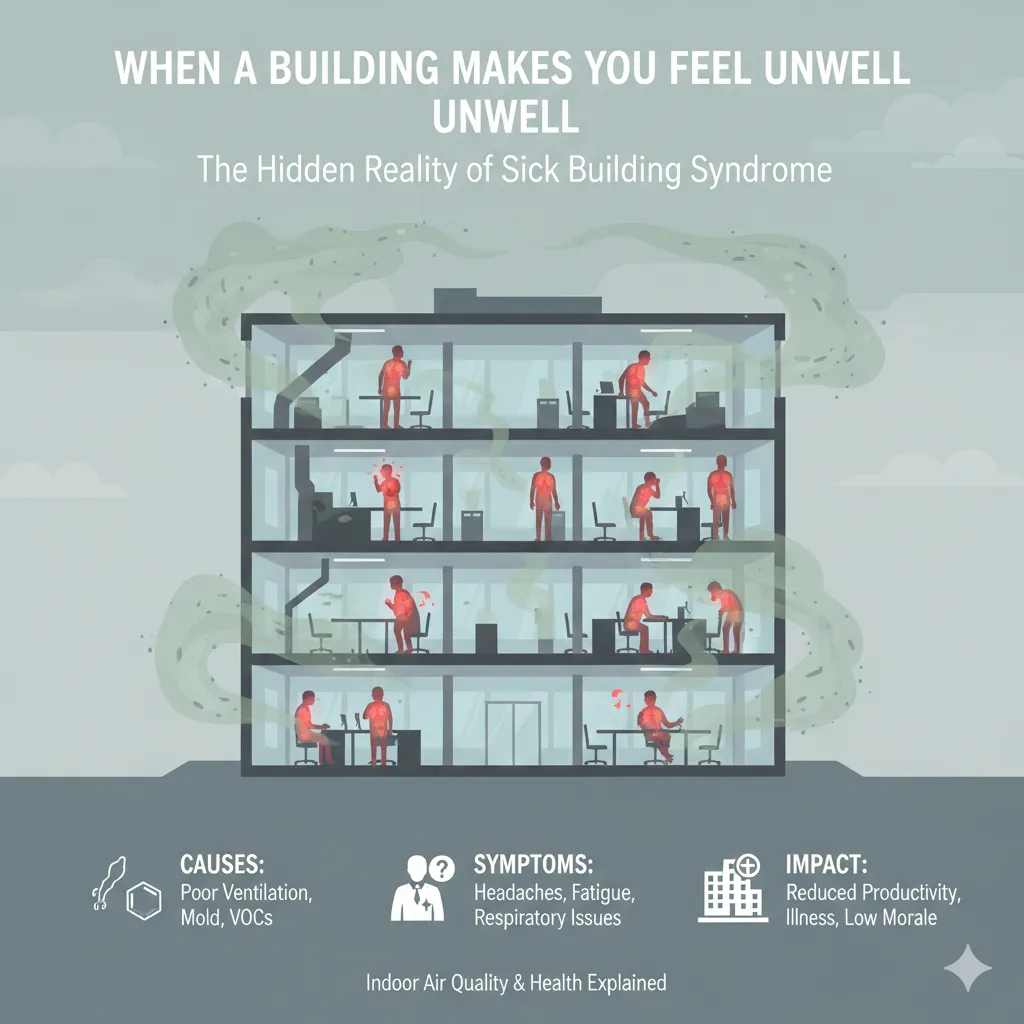
When a Building Makes You Feel Unwell: The Hidden Reality of Sick Building Syndrome
Have you ever noticed this strange pattern?
You wake up feeling fine.
But by the time you’ve spent a few hours inside your office, hospital, school, or apartment, your body feels off.
Your head starts aching.
Your eyes feel dry.
Your energy disappears.
Then you step outside—and slowly, you feel normal again.
This isn’t a coincidence.
This is something doctors and researchers call Sick Building Syndrome (SBS)—and far more people experience it than realize.
What Is Sick Building Syndrome, Really?
Sick Building Syndrome doesn’t point to one disease or infection. Instead, it describes a situation where people repeatedly feel unwell because of the indoor environment they spend time in.
The key clue is timing:
- Symptoms appear indoors
- Symptoms improve after leaving the building
There’s no single test for SBS. But the effects on the body are very real.
Why Modern Buildings Are Making Us Feel Sick
Ironically, many of today’s buildings are designed to be “efficient.”
They’re sealed tightly to conserve energy—but that also means polluted air stays trapped inside.
1. Stale Air and Low Oxygen Flow
When ventilation systems don’t bring in enough fresh air:
- Carbon dioxide levels rise
- Oxygen circulation drops
- The brain starts slowing down
This directly affects alertness, focus, and mental stamina.
That heavy, sleepy feeling you get indoors?
That’s your brain reacting to poor air quality.
2. Invisible Chemicals in Everyday Spaces
Modern interiors release tiny chemical particles known as volatile organic compounds (VOCs).
They come from:
- Office furniture and carpets
- Paints, glues, and floor polish
- Cleaning sprays and air fresheners
- Printers and photocopiers
You can’t smell them after a while—but your body still reacts.
3. Mold and Microbes Hiding in Plain Sight
Moisture inside air ducts, ceilings, or walls allows:
- Mold spores
- Bacteria
- Allergens
to circulate through the air.
This is especially common in buildings with poor maintenance or aging HVAC systems.
Your Building May Be Making You Sick — Here’s How to Know
If your health feels fine outdoors but worsens indoors, don’t ignore it.
Sick Building Syndrome often shows up as daily discomfort, not disease—making it easy to overlook.
Signs Your Indoor Space Is Affecting Your Health
Physical warning signs
- Daily or recurring headaches
- Burning or dry eyes
- Persistent throat irritation
Mental red flags
- Brain fog that slows thinking
- Trouble staying focused
- Feeling exhausted for no clear reason
Breathing-related issues
- Chest pressure or tightness
- Ongoing dry cough
- Breathing discomfort without illness
The biggest red flag:
When symptoms ease the moment you step outside, the building itself may be the hidden cause.
Why Sick Building Syndrome Affects Work Performance
Poor indoor air doesn’t just affect health—it quietly damages productivity.
Research consistently shows that:
- Bad air lowers concentration
- Mental fatigue increases mistakes
- Employees take more sick days
In simple terms, unhealthy buildings create unhealthy workdays.
That’s why indoor air quality is now considered a serious workplace wellness issue—not a luxury.
How to Reduce Sick Building Syndrome Naturally (Without Making Life Complicated)
If you often feel tired, foggy, or uncomfortable indoors, the problem may not be you — it may be the space around you.
The good news? You don’t need costly upgrades or major changes to feel better. Small, natural steps can make a big difference in reducing Sick Building Syndrome symptoms.
Start With Something Alive
Adding a few indoor plants can quietly improve the air you breathe every day.
Plants like snake plants, peace lilies, and spider plants help absorb indoor pollutants and release oxygen. Beyond cleaner air, they also make a space feel calmer and less draining — something your body notices, even if you don’t consciously think about it.
Sometimes, the room just needs to breathe again.
Let Fresh Air Back In
Many modern buildings are sealed tight, trapping stale air inside for hours.
Opening windows — even for 10 minutes — can:
- Push out trapped toxins
- Lower carbon dioxide levels
- Instantly refresh the air
Natural ventilation is simple, free, and surprisingly effective for easing indoor air quality problems linked to Sick Building Syndrome.
Remember: Clean Air Is Different From Clean Floors
A room can look spotless and still make you feel unwell.
Air purifiers with HEPA filters help remove the tiny things you can’t see:
- Dust particles
- Allergens
- Mold spores
Cleaner air often means fewer headaches, easier breathing, and less of that heavy, tired feeling by the end of the day.
Reduce Pollution Where It Starts
Many indoor pollutants come from everyday items we barely notice.
Simple habits help:
- Choose low-VOC paints and furniture when possible
- Keep printers and copiers away from desks
- Make sure AC units and air ducts are cleaned regularly
When you stop pollution at the source, your body doesn’t have to fight it later.
Dr. Vertika Kulshrestha - We often blame stress, age, or workload for feeling drained—but sometimes, the real issue is the air around us.
Sick Building Syndrome symptoms are your body’s way of saying:
“Something here isn’t right.”
When indoor air improves, people don’t just breathe better—they think clearer, work smarter, and feel more alive. Because health doesn’t begin with medicine.
It begins with the space you live and work in.