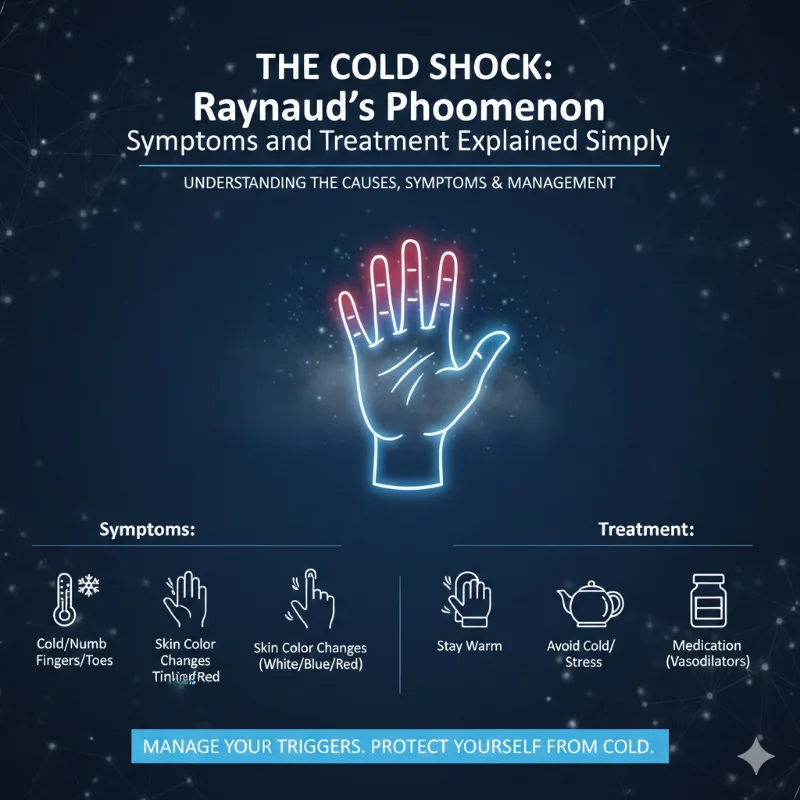
The Cold Shock: Raynaud's Phenomenon Symptoms and Treatment Explained Simply
Have you ever noticed that when you step into a cold room or hold a glass of ice water, your fingers—or sometimes your toes—suddenly turn a dramatic white or blue? They might feel like blocks of ice, followed by a painful tingle as they warm up. If this happens regularly, you might be experiencing Raynaud's Phenomenon.
1. The Blood Traffic Jam: Why do fingers turn white?
Raynaud's is a temporary, involuntary spasm in the small blood vessels. Think of it like a sudden, severe traffic jam in your fingers and toes.
Phase 1 (White/Blue): When exposed to cold or stress, tiny blood vessels squeeze shut. Since blood can't get through, the skin loses oxygen and turns white or blue. This causes intense numbness.
Phase 2 (Red): As the area warms up, the spasm releases and blood rushes back in. This rapid influx causes throbbing, tingling, and sharp pain.
2. Is it Serious? Types of Raynaud's
Understanding the two types is key to Raynaud's disease causes and diagnosis:
Primary Raynaud’s (Raynaud’s Disease): The most common and gentler form. It shows up on its own without any underlying illness. It simply means your blood vessels are extra sensitive to cold.
Secondary Raynaud’s (Raynaud’s Phenomenon): This is less common and is triggered by another health issue, often an autoimmune condition like Lupus or Scleroderma. This type requires a more detailed medical check-up.
3. Staying Warm: Management and Prevention
The best Raynaud's Phenomenon treatment is prevention. You are essentially trying to "trick" your blood vessels into staying open.
The Layering Rule: Don't just focus on your hands. Wear a hat and warm socks. Keeping your core body temperature up helps keep blood flowing to your extremities.
Spot the Triggers: Flare-ups often happen when grabbing something from the freezer or entering a cold grocery store. Keep insulated gloves handy for these quick tasks.
Calm Your Body: Stress is a quiet trigger. When anxiety hits, blood vessels tighten. Deep, mindful breathing can help relax those tiny vessels.
Get the Blood Moving: If you feel numbness creeping in, try a "windmill" motion with your arms to boost circulation and warm your hands quickly.
4. When to Seek Medical Help
If your episodes become frequent, extremely painful, or if you notice wounds or infections around your fingertips, don't ignore it.
Doctor's Advice: In some cases, specialists may suggest medications like calcium channel blockers, which help open up the blood vessels. These are effective Raynaud’s treatment options when lifestyle changes aren't enough.
Dr. Vertika Kulshrestha: By understanding your triggers and taking preventative steps, you can significantly reduce the impact of these frustrating circulation issues. You don't have to live in discomfort; a few small habits can make a world of difference.